
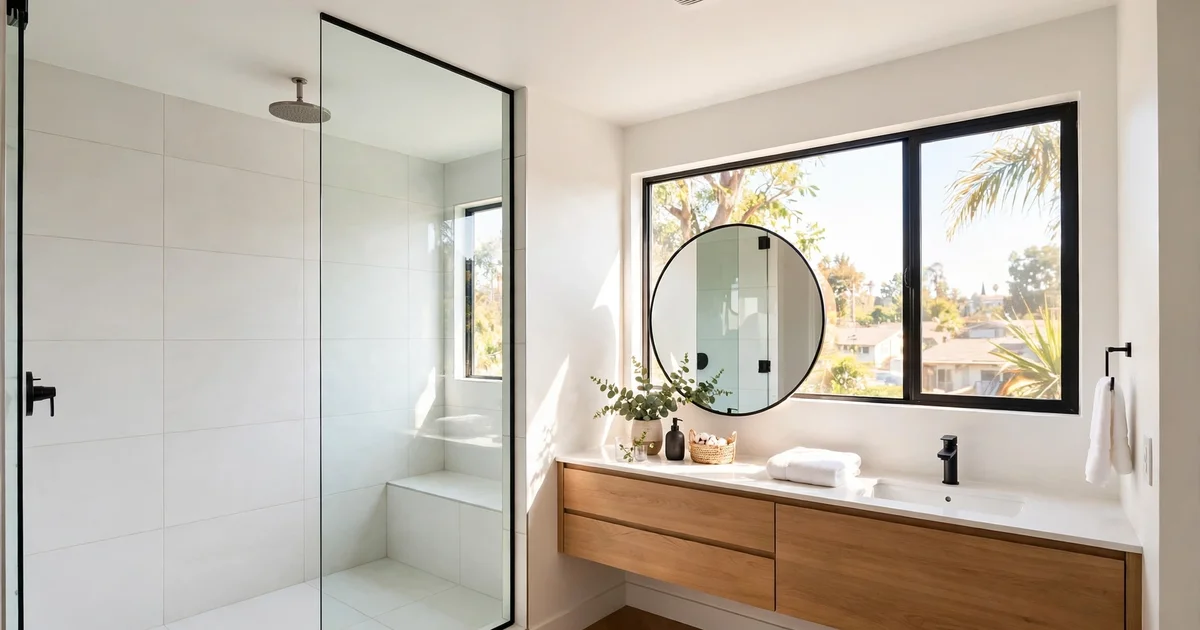
The exhaust fan is the hardest-working fixture in the bathroom and the least thought about — until it is missing or failing. Then you get fogged mirrors, peeling paint, and moisture working its way into the finishes you just paid for. Good ventilation protects the whole remodel. Here is why it matters, what a good install looks like, and when the work needs a permit.
Why ventilation matters
Every hot shower fills the bathroom with moisture, and that moisture has to go somewhere. Without proper ventilation, it settles on walls, ceilings, mirrors, and inside wall cavities — shortening the life of paint, grout, and finishes, and creating the damp conditions that cause long-term problems. A bathroom remodel without proper ventilation is a new finish installed on top of an old problem.
What a good exhaust fan install looks like
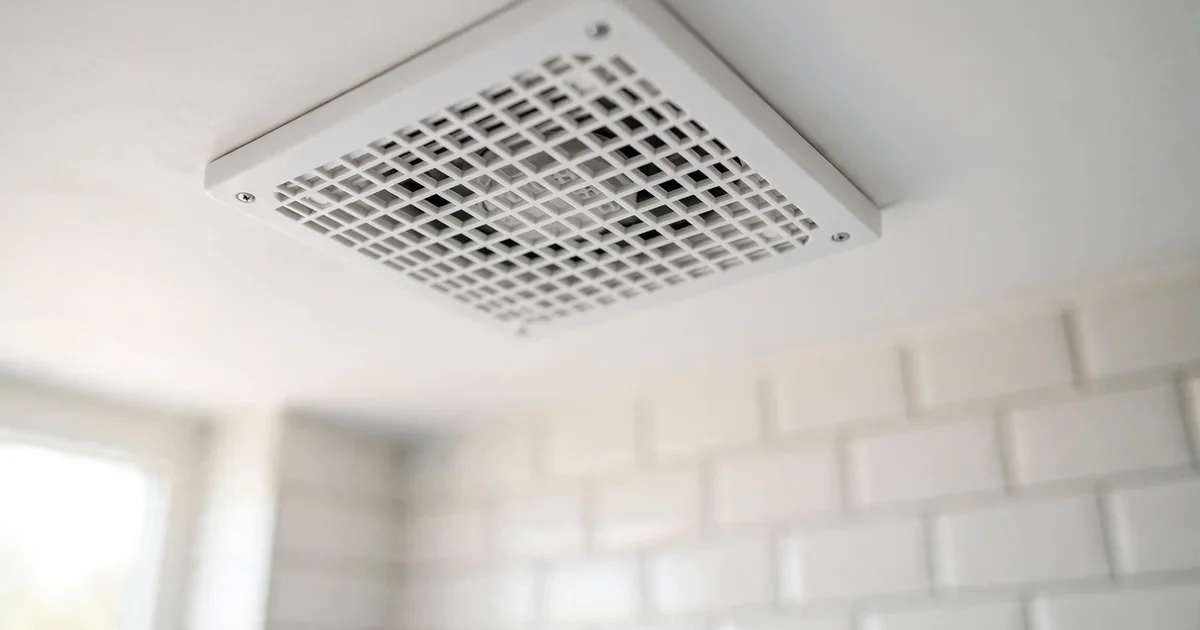
A good install has three traits: the fan is placed where the moisture is (over or near the shower or tub), it is sized to the room, and — most important — it vents to the exterior of the house, not into the attic or a wall cavity. Venting into the attic just moves the moisture problem out of sight. The duct run should be as short and straight as practical, and the exterior cap should keep weather and pests out. These are the details that separate a fan that works from a fan that just makes noise.
Replacing an existing fan vs adding a new one
Swapping a like-for-like fan in the same spot with the existing wiring and ductwork is the simplest case — the infrastructure is already there. Adding a fan where none existed is a different project: it needs new electrical wiring, a new duct run through the ceiling or wall, and an exterior vent termination. Both are routine work, but the scope — and the permit tier — is different, which is why the estimate needs to know which one you are dealing with.
Quieter fans and useful features
Modern fans are dramatically quieter than older ones, and the quiet ones actually get used — a loud fan gets switched off, which defeats the purpose. Timer and humidity-sensing controls are worth considering; they keep the fan running after you leave the bathroom so the moisture actually clears, without relying on anyone remembering to flip a switch. These are comfort and performance choices, not structural ones.
When ventilation work needs a permit in San Jose
Ventilation work sits squarely in the three-tier system:
- Cosmetic / surface work — usually no permit. Surface-only changes with no new electrical or mechanical work typically land here.
- Minor work — permit + inspection. Adding a new exhaust fan involves new electrical and mechanical work, so even with no structural change, it needs a permit and inspection. These go through SJPermits.org. (City: minor permits)
- Major / structural work — plan review as a major remodel, only if structure is altered. (City: major remodel)
How long the work takes depends on the scope, the permit type, and inspections. Your free estimate includes a timeline for your specific scope and confirms the tier. For the full picture on bathroom permits, see our guide to bathroom remodel cost, timeline, and permits in San Jose.
Related guides
- Bathroom Remodeling in San Jose — our main bathroom remodeling service page
- Bathroom Remodeling in Berryessa — bathroom remodeling for Berryessa homeowners
- Shower vs tub decisions — the first big fixture decision
- Bathroom tile guide — what to pick before you call
How to get started
Free estimate — call now: +1 (323) 328-8334. We take calls Monday–Saturday 9–5 and Sunday 10–4. No qualifying questions before the call — just tell us about your bathroom. Prefer to write first? Use our contact page.