
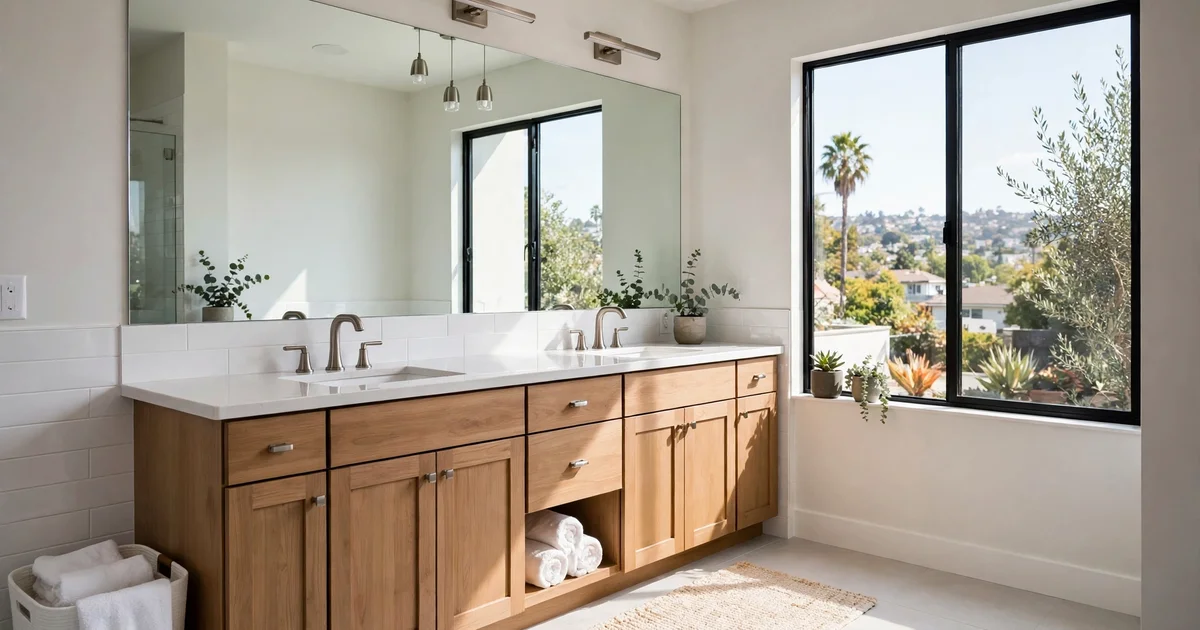
The morning bathroom bottleneck has a name: one sink, two people. In 2026 the double-sink vanity went from luxury to expectation — most newly renovated bathrooms now have two sinks, and wider vanities are right behind. If you’re remodeling anyway, this is the upgrade to decide on now, because it shapes the plumbing, the vanity, and the whole layout. Homeowners across San Jose — from Berryessa to Rose Garden — are weighing whether the second sink is worth the plumbing work. Here is how to think about sizes, plumbing, and when the work needs a permit.
Vanity sizes that work
Vanity width drives everything. A 60-inch vanity is the practical minimum for two sinks — narrower than that and the sinks crowd each other and nobody gets elbow room. A 72-inch (or wider) vanity is the comfort zone: two full sink stations with counter space between them. Match the vanity to the room first: a double sink in a bathroom too small for it is worse than a great single sink. Measure the room, then decide, not the other way around.
The plumbing reality: one drain or two?
This is the part most homeowners don’t expect. A single-sink vanity has one drain line and one set of supply lines. Doubling the sinks usually means doubling (or reconfiguring) the drain and supply plumbing behind the wall — not just setting a wider cabinet in place. A like-for-like vanity swap in the same spot with existing plumbing is the simplest case. Converting a single sink to a double is a plumbing project: the wall gets opened, the drain gets reconfigured, and the scope — and the permit tier — changes.
Countertops and storage choices
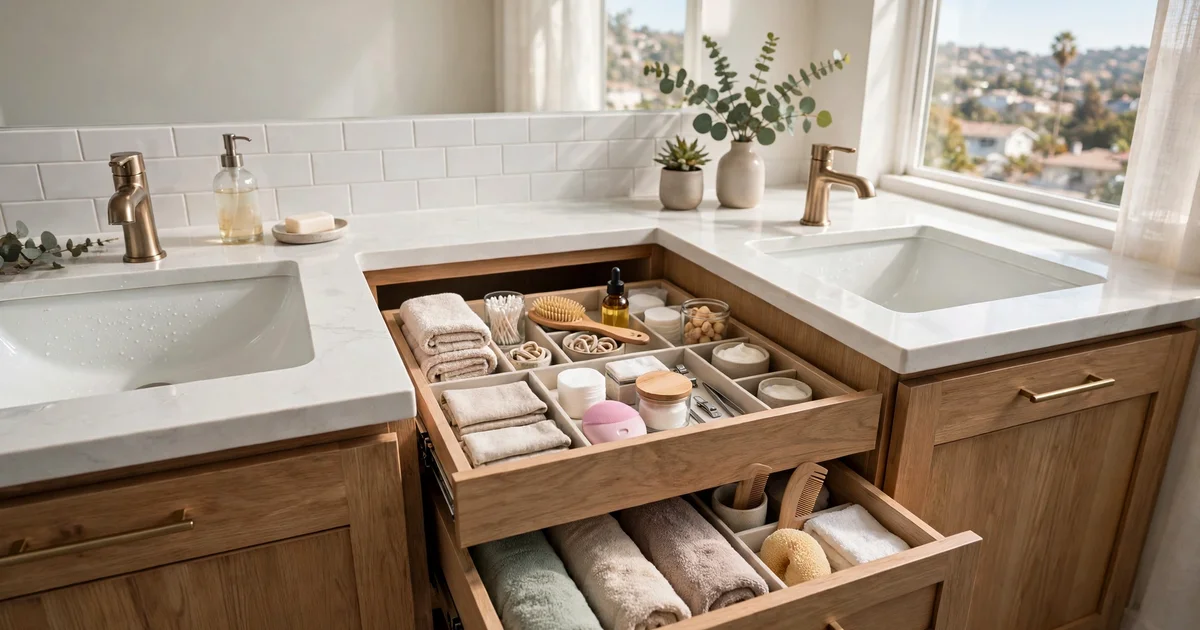
Two sinks change the counter math: less counter, more basins. Choose basins that fit the vanity width without swallowing the landing space between them — undermount sinks keep the counter easy to wipe. Storage matters more than ever with two users: drawers beat doors for reachability, and a bank of drawers between the sinks gives each person a side. Medicine cabinets or tall storage on the side walls can reclaim what the wider vanity took from the room.
Permits for a double-sink upgrade in San Jose
Where this lands depends on how much the plumbing changes:
- Cosmetic / surface work — usually no permit. A like-for-like vanity swap in the same footprint with no plumbing, electrical, or structural changes typically lands here.
- Minor work — permit + inspection. Converting single to double with reconfigured drains and supply lines, or adding electrical for lighted mirrors and outlets, typically needs a permit and inspection. These go through SJPermits.org. (City: minor permits)
- Major / structural work — plan review as a major remodel, only if walls or structure change. (City: major remodel)
How long the work takes depends on the scope, the permit type, and inspections. Your free estimate includes a timeline for your specific scope and confirms the tier. For the full picture on bathroom permits, see our guide to bathroom remodel cost, timeline, and permits in San Jose.
Related guides
- Bathroom Remodeling in San Jose — our main bathroom remodeling service page
- Bathroom Remodeling in Berryessa — bathroom remodeling for Berryessa homeowners
- Bathroom ventilation and exhaust fans — why ventilation matters in a remodel
- Small bathroom layout ideas — layout without moving plumbing
How to get started
Free estimate — call now: +1 (323) 328-8334. We take calls Monday–Saturday 9–5 and Sunday 10–4. No qualifying questions before the call — just tell us about your bathroom, or reach out through our contact page.