
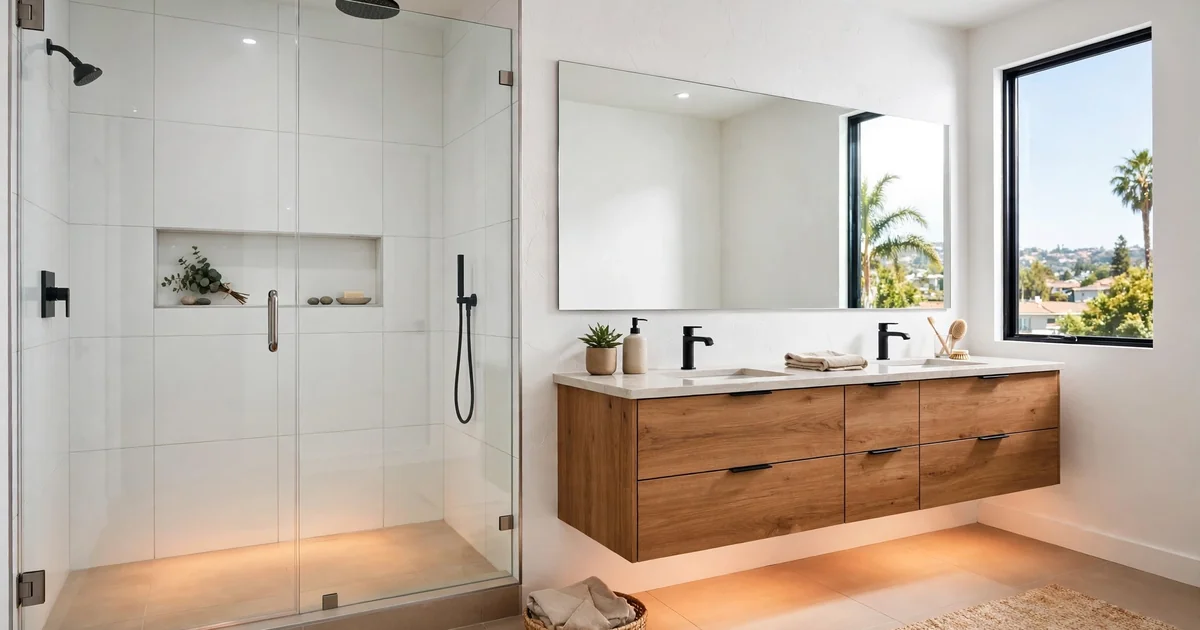
Step onto a tile floor on a January morning and you’ll understand the fastest-growing upgrade in 2026 bathrooms. Heated floors — radiant heat installed under the tile — are showing up in more than half of the year’s standout bathroom projects, and Bay Area remodels are running ahead of the national pace. Here’s how the systems work, what the install involves, and where the permits land.
How heated floors work
Most residential bathroom installs use electric radiant heat: thin heating mats or cables laid under the tile, wired to a thermostat on the wall. The floor warms up on a schedule — mornings, evenings — and stays at whatever temperature the thermostat holds. Hydronic systems (hot water in tubing) exist too, but they’re typically a whole-house project, not a bathroom-only decision. For a bathroom remodel, electric is the standard answer: it lives under the tile you’re already installing.
What the install actually involves
The heating elements go in during the tile phase, not after: mat or cable on the subfloor, thinset, then tile. The electrical work — a dedicated circuit and a thermostat — happens before that. The critical detail is planning the heated zones: heat goes where feet go (the open floor area), not under the vanity, the toilet, or the tub, where it would be wasted. Decide the zones when the tile layout is planned, because moving the layout later means moving the heat too.
Comfort and practical notes
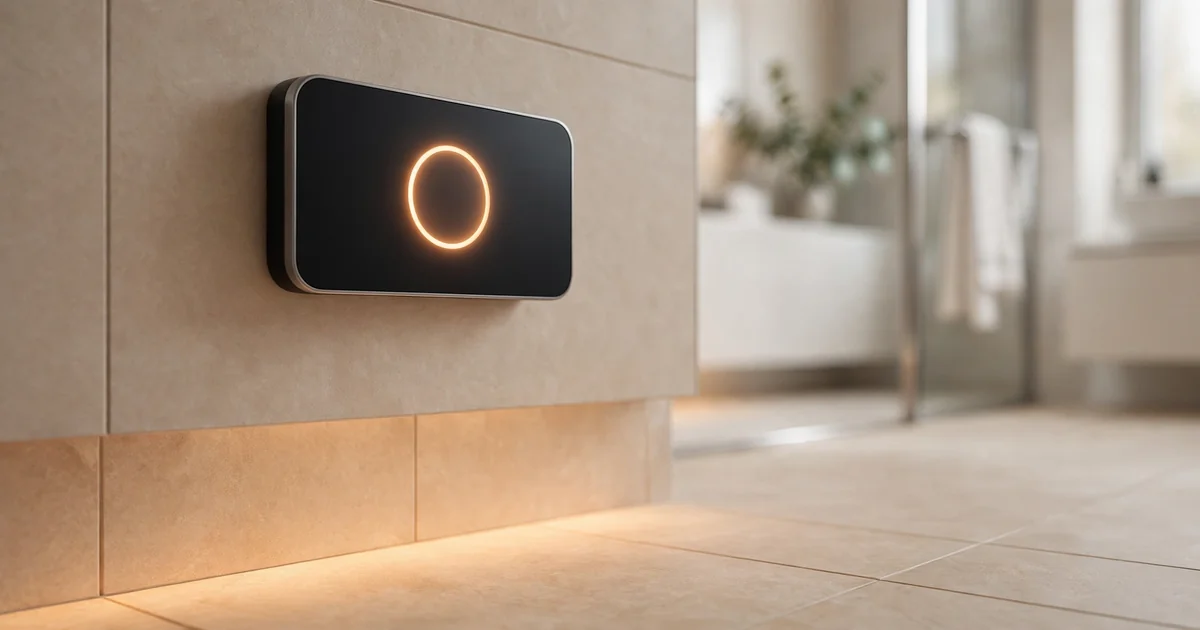
A heated floor doesn’t replace the bathroom’s main heat source — it takes the edge off the tile and makes the room feel warm underfoot, which is where comfort is felt first thing in the morning. It pairs naturally with a quiet exhaust fan on a timer, so the room clears moisture while the floor stays warm. The thermostat is the whole control story: programmable schedules, floor sensors, and the ability to warm the bathroom before the alarm goes off.
Permits for heated floors in San Jose
The electrical work puts this squarely in the permit tiers:
- Cosmetic / surface work — usually no permit. Surface-only tile changes with no new electrical or mechanical work typically land here — but a heated floor is never just a surface change.
- Minor work — permit + inspection. New electrical circuits, the thermostat, and the heating system itself typically need a permit and inspection. These go through SJPermits.org. (City: minor permits)
- Major / structural work — plan review as a major remodel, only if the subfloor or structure is altered. (City: major remodel)
How long the work takes depends on the scope, the permit type, and inspections. Your free estimate includes a timeline for your specific scope and confirms the tier. For the full picture on bathroom permits, see our guide to bathroom remodel cost, timeline, and permits in San Jose.
Related guides
- Bathroom Remodeling in San Jose — our main bathroom remodeling service page
- Bathroom Remodeling in Japantown — bathroom remodeling for Japantown homeowners
- Bathroom Remodeling in Silver Creek Valley — bathroom remodeling for Silver Creek Valley homeowners
- Bathroom tile guide — what to pick before you call
- Bathroom ventilation and exhaust fans — why ventilation matters in a remodel
How to get started
Free estimate — call now: +1 (323) 328-8334. We take calls Monday–Saturday 9–5 and Sunday 10–4. No qualifying questions before the call — just tell us about your bathroom. Prefer to reach out online? Use our contact page.